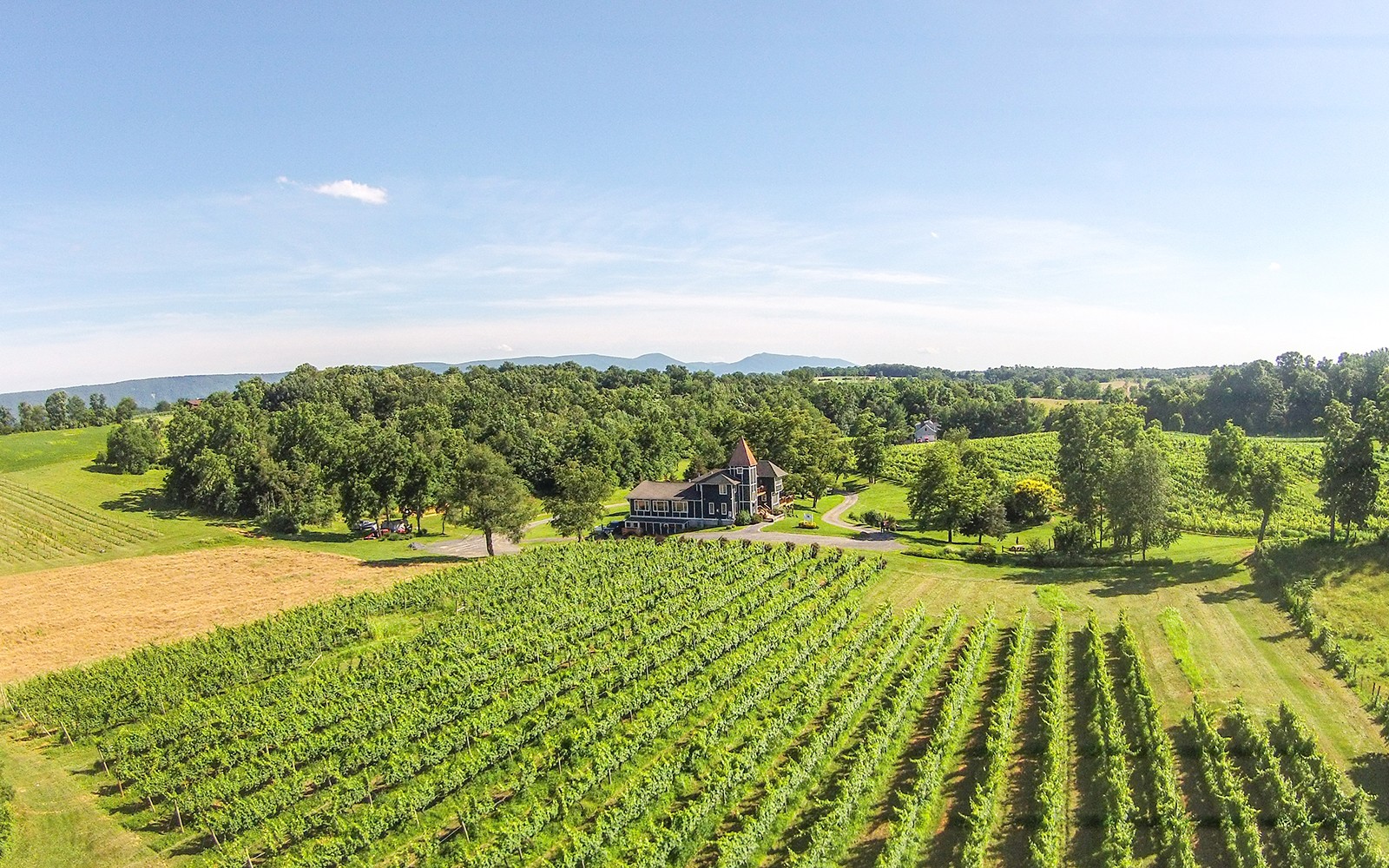
47 acres in the Shenandoah Valley
The Vineyard
Fifteen producing acres of vines grow across limestone and sandstone-influenced slopes.
Estate soils, mountain weather
Two distinct soils across one estate.
North Mountain’s 15 producing vineyard acres follow the estate’s slopes, soils, elevation, and changing seasons. Together, those conditions give the vineyard its sense of place.
The eastern hill carries tan-brown soils influenced by sandstone, with abundant gravel, pebbles, and cobbles in a gravelly-silty loam. Farther west, vines grow on gently rolling slopes over limestone, where deep reddish-brown clayey-silty loam contains weathered chert, quartz, feldspar, clay, and iron oxides.
At about 1,000 feet of elevation, the rolling slopes help moderate temperatures and deflect spring frost. The Blue Ridge and Allegheny Mountains contribute to a rain-shadow effect that can support healthy ripening and concentration.
- Sandstone-influenced soils drain quickly and warm rapidly.
- The western vines grow in deep clayey-silty loam over limestone.
- Each release has its own profile; explore current wines for vintage-specific tasting notes.
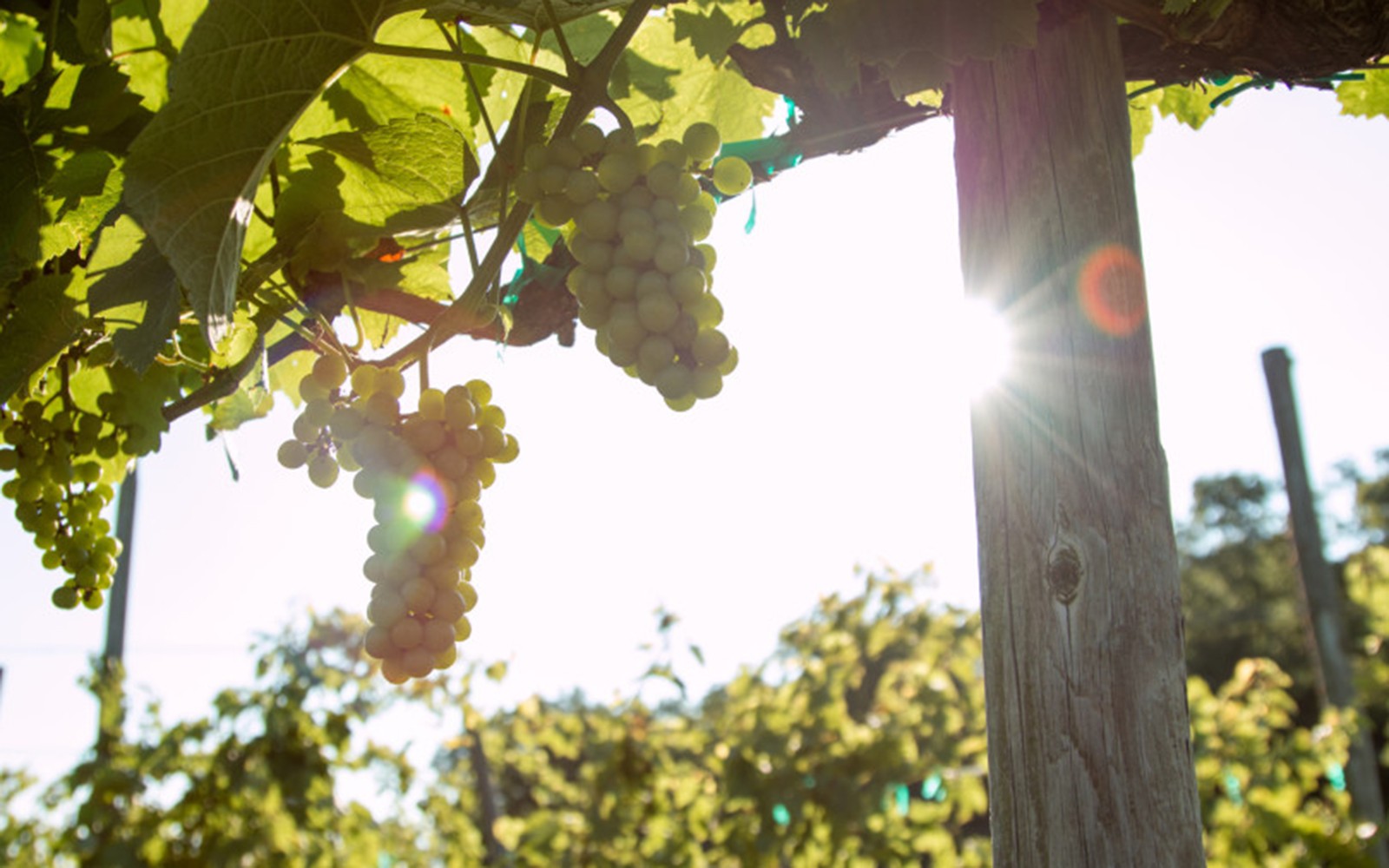

Planted with the land in mind
Varieties matched to each slope.
The original plantings of Chambourcin, Vidal Blanc, Traminette, Chardonnay, Cabernet Franc, and Cabernet Sauvignon grow on the western limestone soils. The eastern sandstone-influenced block added Petit Verdot, Cabernet Sauvignon, Zweigelt, and Riesling, first harvested in 2013.
