Winegrowing and terroir

The Vineyard

Distinct soils, gentle slopes, limestone, sandstone, and Shenandoah Valley weather shape the North Mountain wines.

Estate soils, mountain weather

Two soil stories on one Shenandoah Valley estate.

The grape vines at North Mountain produce wines of distinction by expressing the soils, landforms, climate, and elevation of the estate. That complete growing environment is the vineyard's terroir.

The eastern hill carries tan-brown soils influenced by sandstone, with abundant gravel, pebbles, and cobbles in a gravelly-silty loam. Farther west, vines grow on gently rolling slopes over limestone, where deep reddish-brown clayey-silty loam contains weathered chert, quartz, feldspar, clay, and iron oxides.

The surface soils are largely weathered of carbonate minerals, but their remaining influence helps buffer the soil pH near 6.5. The result is a vineyard that can ripen fruit with structure while preserving the freshness that makes Shenandoah Valley wine compelling.

Climate and elevation

North Mountain sits at about 1,000 feet of elevation, helping moderate daytime and nighttime temperatures. The rolling slopes help deflect spring frost, while the Blue Ridge and Allegheny Mountains contribute to a rain-shadow effect. Shenandoah County's relatively low rainfall can support healthier ripening and greater wine concentration.

Geology under the vines

The vineyard lies within the Conococheague Limestone, an approximately 500-million-year-old Cambrian rock unit formed from ancient shallow marine tidal sediments. Ribbon-rock layers, stromatolites, dolomite, limestone, and brecciated beds tell the story of changing sea levels long before vines were planted here.

How the site tastes

North Mountain reds are generally ruby colored with mild acidity and notes of plum and brambleberry. Whites tend toward spicy and fruit-driven notes, including apple, pear, and subtle tropical character. Vintage weather changes the intensity, but the vineyard signature remains consistent.

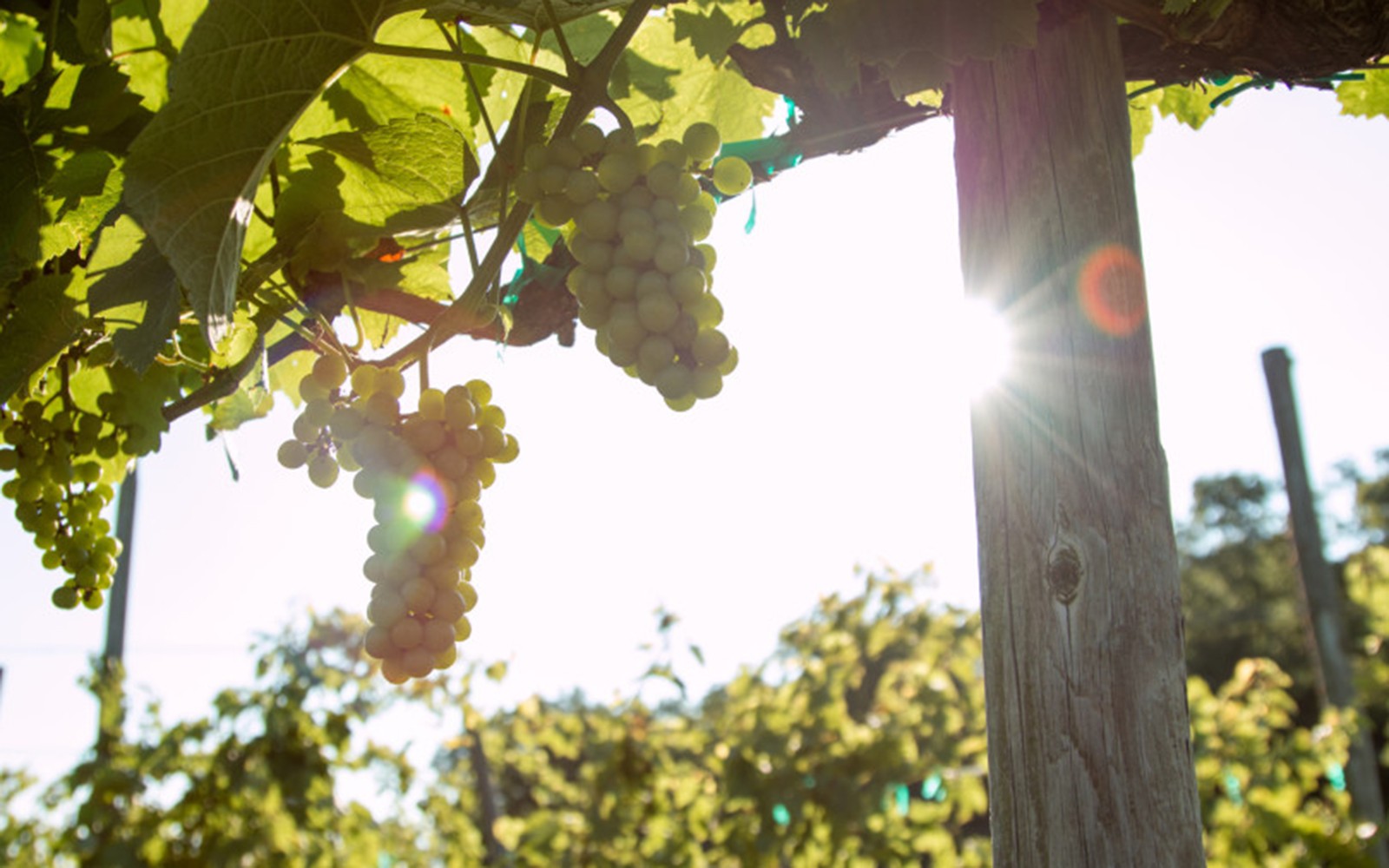
Grapes ripening on North Mountain vines
Fruit and canopy in the growing season
Sandstone-influenced vineyard soil with fragments
Sandstone-influenced vineyard soil

Elevation

About 1,000 feet

Moderates daytime and nighttime temperatures during the growing season.

Setting

Between mountain ranges

The Blue Ridge and Allegheny Mountains help create a rain-shadow effect.

Slope

Gently rolling hills

The vineyard's terrain helps deflect spring frost and support healthy ripening.

Planted for expression

Sandstone and limestone slopes carry different voices.

The original plantings of Chambourcin, Vidal Blanc, Traminette, Chardonnay, Cabernet Franc, and Cabernet Sauvignon grow on the more westerly limestone soils. On the easterly sandstone-influenced block, North Mountain added Petit Verdot, Cabernet Sauvignon, Zweigelt, and Riesling, first harvested in 2013.

  • The sandstone-influenced soils are lower in water and nutrient holding capacity.
  • The sandstone-influenced rows are better drained and warm more rapidly.
  • Reduced vine vigor can help fruit concentration and wine quality.
Ribbon rock showing alternating layers of limestone and dolomite
Ribbon rock with limestone and dolomite layers
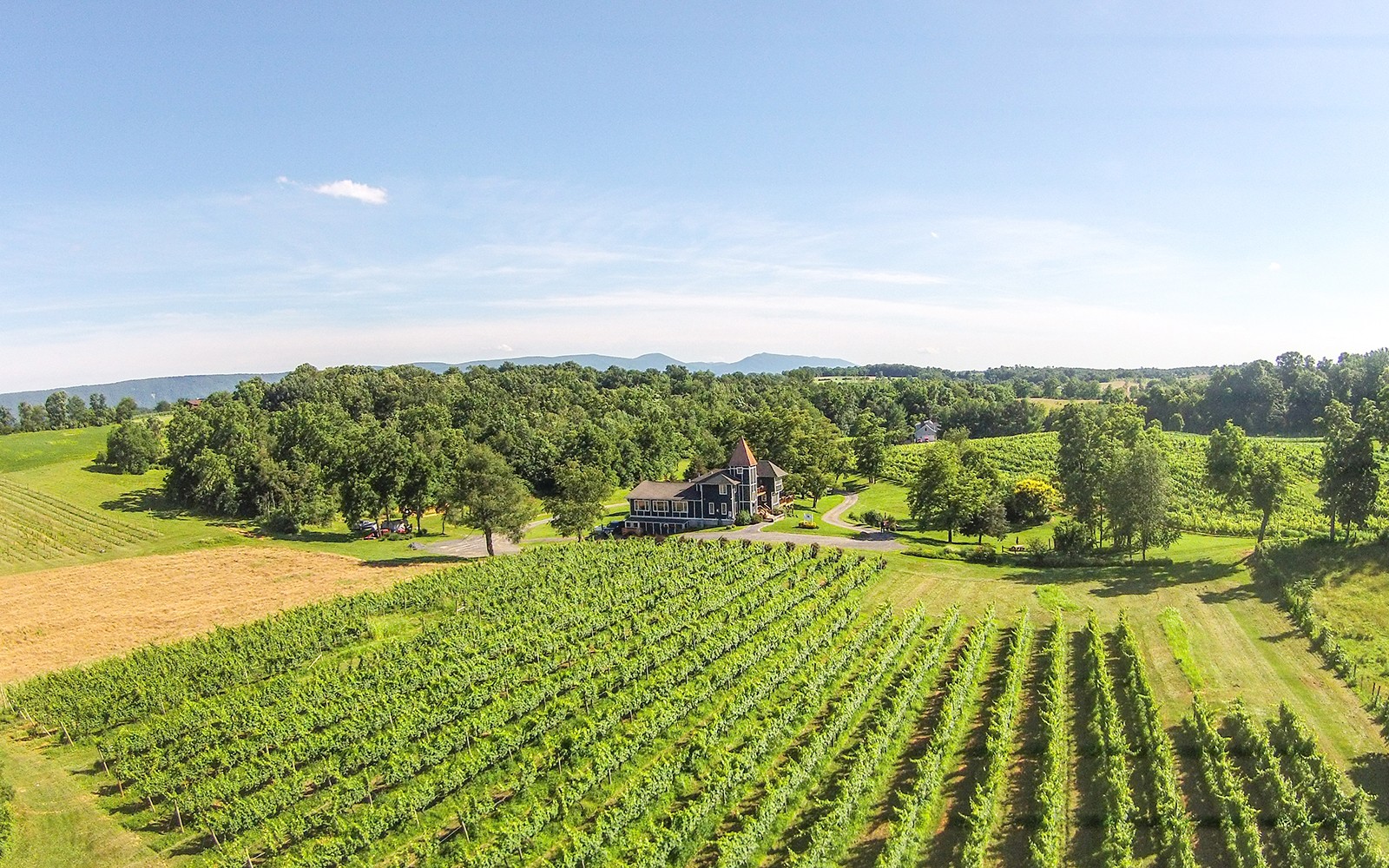
North Mountain Vineyard rows in the growing season
Green vineyard rows in season